
ABOUT JOYAN CONSULTING
Joyan Consulting was founded in 2023 by Louis-Jean to help new technology projects to emerge.
EPC and O&M strategies to derisk your Project
New technology projects carry massive risks. Yet, projects fail not because of being first-of-a-kind, but because risks are not mitigated at early stage. Contractors carry massive contingencies in their prices to cover that risks, increasing the capital expenditure (CAPEX) of the project by up to 40%. Investors do not commit. The final investment decision fails.
At Joyan Consulting, we guide developers in applying the optimal strategies
for the Engineering, Procurement, and Construction (EPC) and Operation and Maintenance (O&M) phases of their project to keep control of your CAPEX, secure final investment decision and project success.
As seen in:


Carbon Capture Journal 104/105 – Mar-Jul 2025: L-J. Germain, “Strategies for Enhancing the Economic Viability of Carbon Capture Projects”
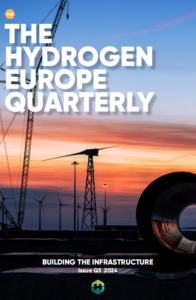

Hydrogen Europe Quarterly Magazine (Q4-20026): L-J. Germain, “Solutions to Unlock FID”, (2024).
Project Success
At Joyan Consulting we promote project success through the publication:
“6 Principles for Project Success,” published in 2024 by Louis-Jean Germain.
- Principle 1:Each party in a contracting chain must bear the risk that it is able to assume or mitigate.
- Principle 2:Individuals from parties mobilized on the project must be empowered to work as a single team for the success of the project.
- Principle 3:Parties must focus on identification and mitigation of risk all along the project.
- Principle 4:Parties must reach common understanding of the facts as the work progresses.
- Principle 5:Parties must adjust the project execution shortly after the occurrence of event.
- Principle 6:Method for quick resolution of conflict must be established from the outset of the project.
Purchase online: